
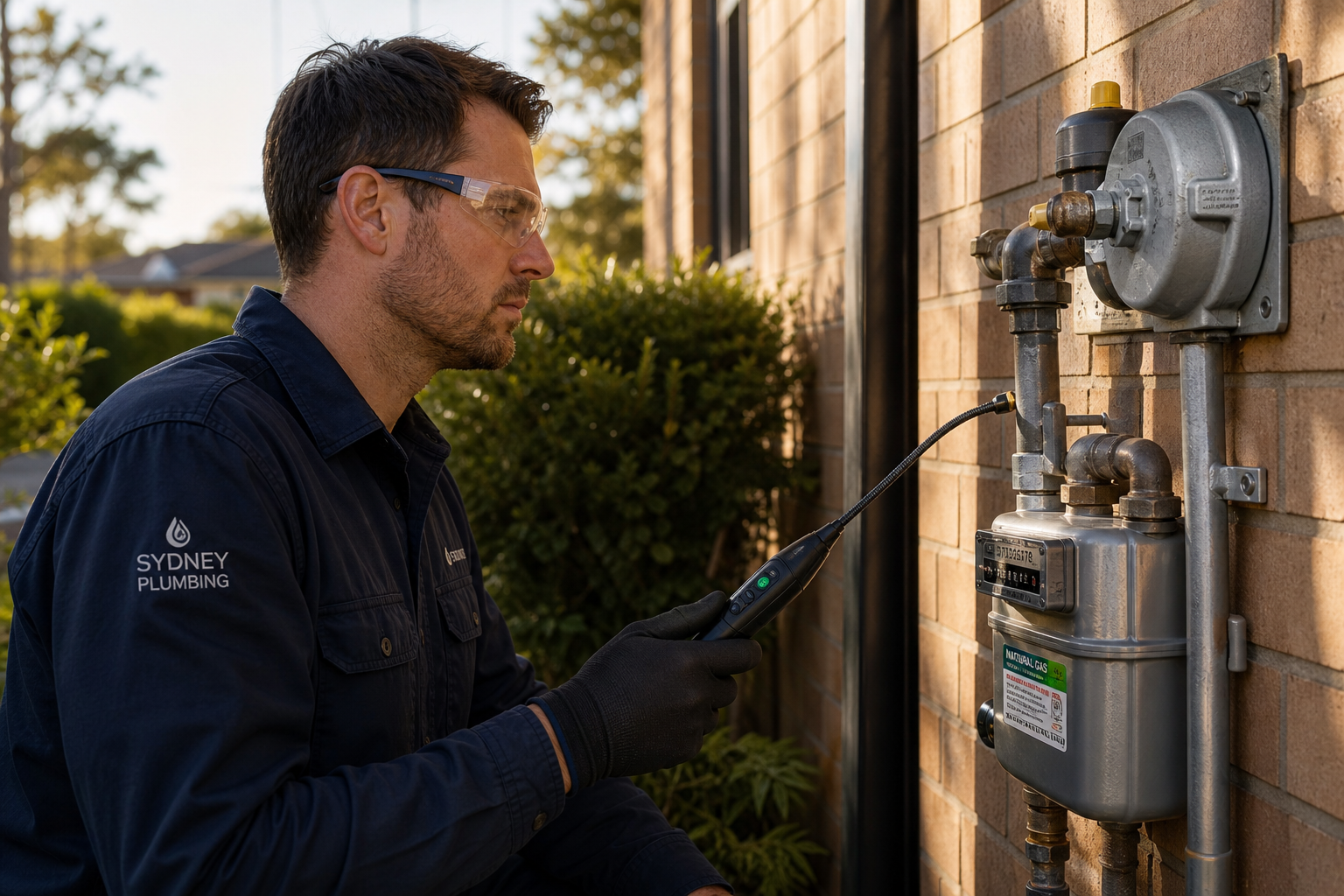
A gas leak in your Sydney home is genuinely dangerous. Natural gas combusts at concentrations as low as 5% in air; once ignited, the result can be catastrophic structural damage and serious injury. The 2010 Hawthorn (Melbourne) gas explosion that destroyed three homes started with an unaddressed minor leak.
The good news: Sydney’s gas emergency response system is genuinely effective. Jemena Gas Networks operates a 24/7 emergency line that responds rapidly and competently. Combined with proper homeowner response and a licensed gasfitter for the follow-up repair, gas leaks in Sydney homes are routinely resolved without incident.
This guide covers the exact sequence to follow if you smell gas at home, what each party does, and how to identify the warning signs that warrant gas-leak response. For the repair itself, our licensed gas leak emergency Sydney team carries gas compliance certificates issued on the spot at job completion.
What gas smells like
Natural gas in its raw state is odourless. To make leaks detectable, gas distributors add mercaptan (typically methyl mercaptan or ethyl mercaptan) at very low concentrations. The result is a distinctive sulphurous, rotten-egg smell.
The smell is deliberately strong. You can detect mercaptan at concentrations well below the lower explosive limit of natural gas — typically at gas concentrations under 1% in air, while the explosive range starts at 5%.
If you can smell gas at all, even faintly, the concentration is above detection threshold and warrants response. Don’t second-guess the smell.
The emergency response sequence
Six steps in order. Memorise them. Print and stick somewhere visible.
Step 1 — Don’t ignite anything
The single most important immediate action. Don’t:
- Light any flame (candles, matches, lighters, gas stove, cigarettes)
- Operate any electrical switches (lights, fans, ceiling fans, air conditioning, appliances)
- Use the doorbell on entry/exit
- Use mobile phones inside the gas-saturated area (electrical contacts in the phone can create micro-sparks)
- Start vehicles inside garages connected to the building
Any of these can ignite an explosive gas-air mixture.
Step 2 — Open windows and doors
If you can do so safely (without operating electrical switches or igniting anything), open windows and doors to ventilate. Even brief ventilation reduces concentration significantly.
Step 3 — Get everyone out of the building
Exit the building. Take pets if possible. Don’t take time to collect personal belongings. Get everyone to a safe distance (at least 20 metres from the building).
If anyone feels unwell — dizzy, nauseous, headache, breathless — ring 000 from outside the building.
Step 4 — Ring Jemena Gas Networks
From outside the building, ring 1800 GAS LEAK (1800 427 532). This is the Jemena Gas Networks 24/7 emergency line covering the Sydney metro.
Tell them:
- Your address
- That you smell gas
- Whether anyone has felt unwell
- Whether the building is currently evacuated
Jemena will dispatch an emergency crew typically within 60 minutes for the Sydney metropolitan area. Their job is to make the supply safe at the network level, not to perform the repair.
Step 5 — Stay outside until Jemena arrives
Don’t re-enter the building until the Jemena crew has confirmed it’s safe. They use gas detection equipment to verify concentrations are below detection threshold before clearing re-entry.
Step 6 — Ring a licensed gasfitter for the repair
Once Jemena has made the supply safe, the repair work is the responsibility of a NSW Fair Trading licensed gasfitter.
You ring the gasfitter. Jemena does not perform the repair — that’s not their role. They isolate; the gasfitter repairs.
The licensed gasfitter:
- Locates the leak using gas detection equipment
- Repairs the failed component (regulator, valve, fitting, appliance connection)
- Pressure tests the system to confirm integrity
- Issues a NSW Certificate of Compliance for the work
- Coordinates with Jemena to restore supply if needed
Typical cost: $250-1,200 depending on the failure point and parts required.
When to ring 000 instead
Some gas-leak situations warrant 000 emergency response rather than (or in addition to) Jemena:
- Anyone in the household has felt unwell, dizzy, or breathless
- An explosion has occurred
- A fire is visible
- Someone is trapped in the building
- The leak is from a damaged gas line outside the building (excavation strike, vehicle impact)
000 dispatches NSW Fire and Rescue, which has equipment to manage active emergencies. They liaise with Jemena as needed.
Common gas leak sources in Sydney homes
Based on call-out patterns:
Failed regulator at the meter — common in older builds (1960s-1980s) where the original regulator is reaching end of life. Symptoms: smell at the meter location, sometimes audible hissing.
Corroded brass fittings on hot water units — particularly common in salt-air exposure zones (Eastern Suburbs, Northern Beaches). The fittings connecting the gas supply to the unit develop pinhole leaks at the threads.
Failed thermocouples on gas appliances — when gas storage units or wall heaters lose their pilot, the thermocouple is designed to shut off gas supply. When the thermocouple itself fails, gas can leak past the safety mechanism.
Damaged buried gas lines — common after landscaping, fencing, or excavation work. Spade strikes through the line create immediate leaks. Always have buried services located before excavation (Dial Before You Dig — 1100).
Aged BBQ connections — flexible gas hoses to BBQs and outdoor heaters degrade over years. Annual visual inspection recommended.
Hot water unit pilot assembly failures — internal pilot assemblies can develop leaks within the unit cabinet. Smell detection inside the cabinet rather than externally.
Cooktop connection failures — gas cooktops disconnected and re-connected during kitchen renovations sometimes have inadequate sealing. Smell detection at the cooktop edge.
Carbon monoxide — separate but related
Gas leaks (uncombusted natural gas) produce mercaptan smell. Carbon monoxide poisoning (incomplete combustion of gas appliances) produces no smell — CO is colourless and odourless.
Symptoms of CO exposure include:
- Persistent headache
- Dizziness or lightheadedness
- Nausea
- Confusion
- Drowsiness in unusual patterns
- Multiple household members feeling unwell simultaneously
If multiple household members are experiencing these symptoms, particularly in winter when gas appliances are heavily used, CO leak from a faulty appliance is a possibility worth investigating. Hardware-store CO detectors ($30-80) are worth installing in any home with gas appliances.
Why gasfitting requires a separate licence in NSW
Under the NSW Gas and Electricity (Consumer Safety) Act 2017, gasfitting work is regulated separately from plumbing work. The reason: higher safety risk profile.
Implications:
- A plumber without a current gasfitter’s licence cannot legally work on gas pipework, gas appliances, or gas hot water units in NSW
- Unlicensed gas work voids most home insurance gas-related coverage
- Manufacturer warranties on gas appliances (Rheem, Rinnai, Bosch) require licensed installation
- Gas work performed without a Compliance Certificate may be required to be re-done before property sale or transfer
For emergency gas repair, always verify the operator holds a current gasfitter’s licence before agreeing to dispatch. NSW Fair Trading verification at nswfairtrading.gov.au confirms licence type and currency.
Gas leak prevention
Some sensible preventative measures:
Annual gas system check. A licensed gasfitter inspection of all gas appliances, fittings, and connections takes 60-90 minutes and costs $180-280. Identifies developing issues before they become emergencies.
Visual inspection of hot water unit cladding. Rust on the external cladding is a sign of internal corrosion which often extends to gas-side fittings. Plan for replacement before failure.
Gas appliance servicing. Cooktops, ovens, and gas heaters benefit from professional service every 2-3 years. Service catches developing issues early.
Mercaptan awareness. Make sure everyone in the household recognises the smell of gas. Some people have reduced sensitivity to mercaptan; if anyone in your household has reduced sense of smell, install gas detection equipment in addition to relying on smell-based detection.
Gas detection alarms. Hardware store gas leak detectors ($40-120) provide early warning at concentrations below smell detection threshold. Worth installing in basements, near gas appliances, and in any room with reduced ventilation.
What to do during scheduled gas works
Sydney gas networks occasionally undertake planned maintenance that may temporarily affect supply. Jemena typically notifies affected customers in advance.
If you receive a Jemena outage notification:
- Note the planned outage time
- Turn off all gas appliances before the outage period
- Don’t attempt to use gas appliances during the outage
- After supply restoration, light pilot lights in gas appliances according to the manufacturer’s instructions, or wait until a gasfitter can attend
Final word
Gas leaks are the one residential emergency where the response sequence really matters. Get it right and the resolution is straightforward. Get it wrong and the consequences can be catastrophic.
The sequence to memorise:
- Don’t ignite anything (no flames, no electrical switches)
- Open windows and doors if safe
- Get everyone out
- Ring 1800 GAS LEAK (1800 427 532) from outside
- Stay outside until Jemena clears re-entry
- Ring a licensed gasfitter for the repair — our gas leak emergency Sydney team responds 24/7 with compliance certificates issued on the spot
Print this page. Tape it inside a kitchen cupboard. Make sure everyone in the household knows the sequence. Verify your gasfitter’s NSW licence currency before there’s an emergency so you have a saved contact you trust at 3am.
The Sydney gas emergency response system works well when it’s used properly. Take 5 minutes to make sure your household is ready to use it.