
Skip to content

Sydney Emergency Plumbing

Blocked Drain Emergency Sydney

Sewer backups, blocked toilets, slow drains across the whole house — Sydney's drain emergency team with CCTV, electric eel and hydro-jet on board. Most blockages cleared inside 90 minutes.

  • CCTV drain inspection (so we can see what's actually causing the blockage)
  • Electric eel for soft blockages — hair, grease, fat
  • High-pressure hydro-jetting (5,000 PSI) for hard blockages and root cutting
  • Mechanical root cutters for tree-root infiltration through clay sewer pipes
  • Licensed
  • Insured
  • 24/7
  • Guaranteed

Free quote: Blocked Drain Emergency

Australian format - we'll text you the quote and ETA.
Add brief description (optional)
How urgent?

Free, no obligation. We text within 15 min. Privacy.

What's included with every blocked drain emergency sydney

Every job includes the basics below — no surprise extras tacked on when the invoice arrives.

  • CCTV drain inspection (so we can see what's actually causing the blockage)
  • Electric eel for soft blockages — hair, grease, fat
  • High-pressure hydro-jetting (5,000 PSI) for hard blockages and root cutting
  • Mechanical root cutters for tree-root infiltration through clay sewer pipes
  • Drain camera report supplied with photos for insurance / strata / future planning
  • Free relining quote if structural damage found during inspection
  • 12-month workmanship guarantee on every drain clearance

When to ring us

Signs you've got an emergency on your hands

Not sure if it's urgent? If you're seeing any of the below in your Sydney home, don't wait — small problems become expensive ones inside hours.

  • Sewage backing up through floor drains, toilets, or shower trays
  • Multiple drains blocked simultaneously across different rooms
  • Gurgling sounds from toilets, sinks, or floor drains
  • Sewer smell coming from drains, manholes, or anywhere outside near the boundary
  • Slow-draining bath, shower, or basin that's getting worse over days
  • Toilet that won't flush properly even after several attempts
  • Damp patches in the front or back yard with no obvious cause

How we fix it

About this service in Sydney
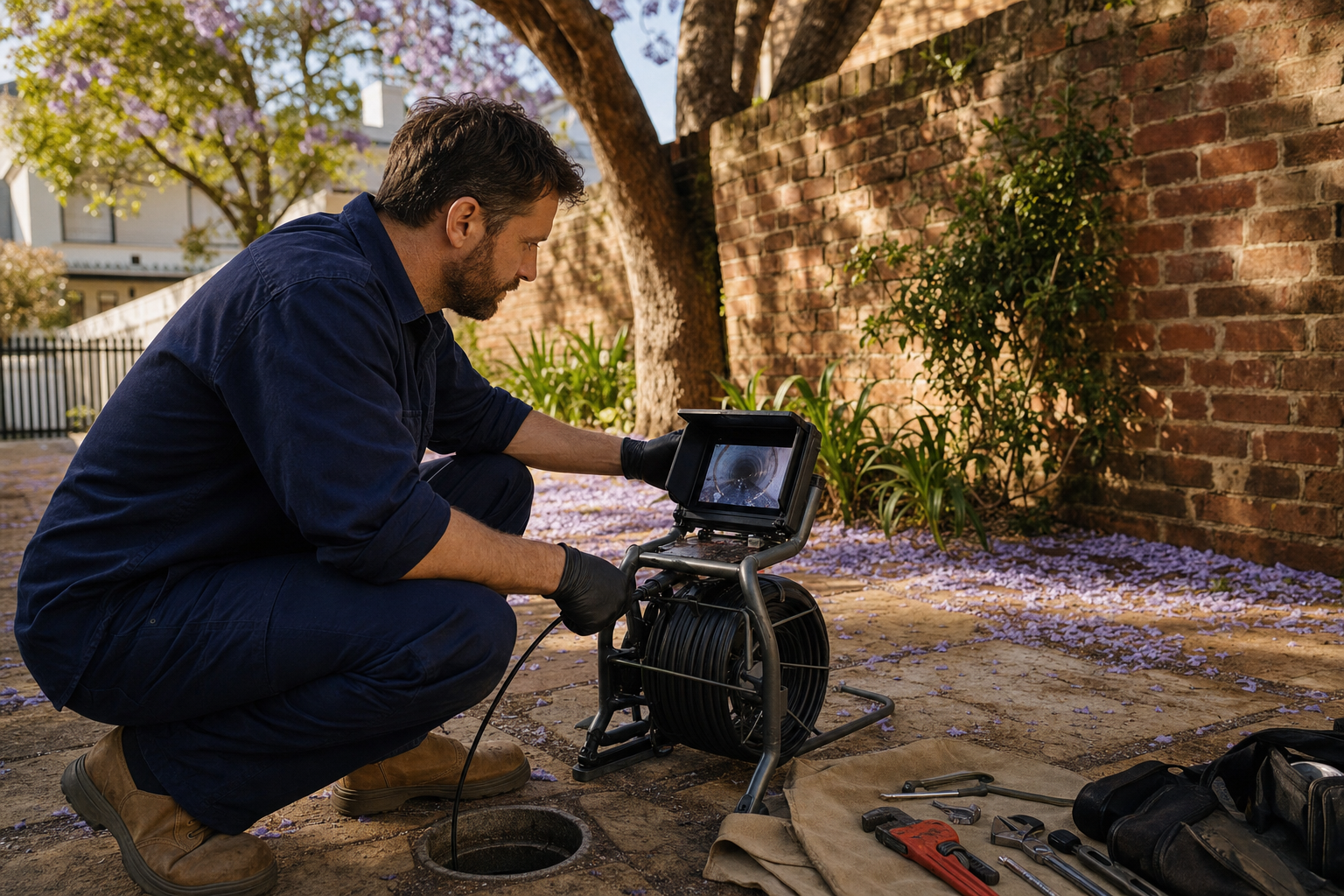
Blocked drain emergency clearance in Sydney

The first sign isn’t always dramatic. A bath that drains slower than it used to. A toilet that needs two flushes. A faint sewer smell near the laundry that you can’t quite place. By the time it’s water rising through the shower drain, the blockage downstream has been building for weeks — sometimes months. Read our guide on the nine signs of a blocked sewer line to catch it early.

Most blocked drain emergencies we attend across Sydney are textbook predictable once you know the suburb. Tree roots through clay sewer pipes in the older inner-ring suburbs. Grease build-up in commercial strata buildings. Hair plugs at bath and shower traps. Reactive clay soils shifting pipes out of alignment in Western Sydney. Each has its own clearance method.

What’s actually blocking your Sydney drain

Five culprits cover about 95% of household calls.

Hair and soap scum. The single most common cause of slow bath and shower drains. Hair binds with soap residue and forms a felt-like plug at the trap. Easy clearance — usually 20 minutes with an electric eel. We see this most in family households across the Hills District and Sutherland Shire where shower use is high.

Grease, fat, and food waste. Kitchen drains across Sydney apartment blocks (Pyrmont, Surry Hills, Ultimo) cop a steady diet of cooking fat poured down the sink. Over a few years it builds into a hard wax-like coating on the inside of the pipe. Eels just bore a hole through it; hydro-jetting is the proper fix.

Tree roots through clay sewer mains. The classic Sydney heritage- suburb problem. Newtown, Glebe, Paddington, Marrickville, Mosman, Lane Cove — anywhere with mature street trees and original clay sewer pipework (which is most pre-1980 housing). Roots find micro-cracks at the pipe joints, expand inside the line, and form root masses that catch every passing piece of toilet paper. Mechanical root cutting clears the immediate problem; relining stops them growing back.

Reactive clay soil movement. Western Sydney (Penrith, Liverpool, Blacktown, Bankstown) and the Hills District (Castle Hill, Baulkham Hills, Kellyville) sit on clay that swells and shrinks with rainfall. Over decades it shifts buried PVC and clay sewer lines out of alignment. The result is bellies (low spots that pool waste), offset joints (where one pipe section drops below the next), and partial collapses. CCTV is the only way to confirm; repair is usually excavation and replacement for the affected section.

Foreign objects. Wet wipes (the single biggest cause of non-residential sewer blockages despite being marketed “flushable”), nappy liners, sanitary products, kids’ bath toys. Mostly clearable with an eel or jet, occasionally need physical removal.

How we diagnose without digging

Old-school plumbers used to clear a drain blind — eel goes in, hopes for the best, hopes the blockage was where they thought it was. We don’t.

Every drain emergency call starts with a CCTV inspection through the sewer overflow gully (the small grated point usually at the back of the house) or through a roof vent if access is restricted. The camera shows:

  • Exact location and depth of the blockage
  • Type of blockage (soft, hard, root mass, collapsed section)
  • Condition of the pipe upstream and downstream
  • Any fittings, bends or junctions worth knowing about
  • Foreign objects requiring physical removal

Five minutes of CCTV usually saves an hour of wrong-tool clearance. You get the recorded footage and a written report whether you book the clearance with us or not — useful for strata sign-offs, insurance claims, or planning a long-term repair.

Clearance methods, ranked

Three tools cover almost every blockage we attend.

Electric eel — a rotating steel cable, usually 15-30mm thick, that punches mechanically through soft blockages. Best for hair plugs, toilet paper jams, and light grease. Quick, cheap, completes the job in 20-40 minutes. The right tool for about 60% of household calls.

High-pressure hydro-jetting — water at around 5,000 PSI delivered through a nozzle that pushes itself along the pipe. Scours the entire pipe wall back to bare surface. Best for hard grease, mineral build-up, distant blockages (>30 metres from access point), and partial root clearance. Standard tool for commercial and strata work.

Mechanical root cutting — a rotating blade head sized to the pipe diameter, run on a flexible drive shaft. Specifically for tree roots that have invaded clay sewer mains. Multiple passes usually needed — once with a small head to break up the root mass, once with a full- diameter head to scour clean. Long-term fix is relining.

We carry all three on every emergency van. The CCTV tells us which to use first.

When clearance isn’t enough

Recurring blockages mean structural problems. If we’ve cleared your sewer line three times in two years, the pipe itself is failing — and no amount of clearance is going to permanently fix it. Two long-term options:

Trenchless relining (CIPP) — a resin-impregnated liner is inserted through your existing pipe via the inspection point, inflated to press against the pipe walls, then cured in place to form a new pipe inside the old one. No digging, no broken pavers, no destroyed gardens. Suitable for most clay sewer mains that are structurally sound but joint-cracked. Lasts 50+ years. Cost ranges around $400-650 per metre depending on diameter and access.

Excavation and replacement — dig up the failing section, replace with new PVC or HDPE pipework, backfill, restore surface. Needed when the existing pipe has fully collapsed or is too damaged to reline. Costs more once you factor in landscape restoration; cheaper upfront per metre.

We’ll quote both options after CCTV confirms what’s actually required. No upselling — just the trade-offs in writing.

Why DIY drain cleaners are usually a waste of money

Caustic drain cleaners (sodium hydroxide and sulphuric acid based) get sold on the promise that they dissolve any blockage. In practice:

  • They don’t break down hair plugs or root masses (the most common causes of household blockages)
  • They damage galvanised and copper pipework over time, voiding manufacturer warranties
  • They generate hazardous fumes inside the home
  • They splash back on the next person who tries to clear the drain with anything physical
  • They void NSW home insurance claims for any damage they contribute to

Save the $20-40 you’d spend on a bottle and put it toward a proper diagnosis instead.

Sydney-specific drain quirks worth knowing

A few things that catch out homeowners (and out-of-town plumbers):

  • Heritage-listed buildings in the Inner West and Eastern Suburbs have specific council requirements for sewer repairs that touch original fabric. We’ve done the paperwork — happy to walk you through it.
  • Strata high-rises in the CBD often have sewer systems shared across multiple lots. A single blockage can affect several apartments on the same vertical riser. Diagnosis usually starts in the lowest- affected unit; clearance is typically a body corporate cost.
  • Coastal suburbs (Bondi, Coogee, Manly) sometimes have sand and shell-grit infiltration through cracked clay pipes that’s mistaken for grease build-up. Different clearance method needed.
  • New estates in Western Sydney occasionally have construction debris (concrete fragments, tile offcuts) flushed during the build that block the sewer line within the first year. Worth investigating if you’ve moved into a new home and have unexplained drainage issues.

We’ve seen all of them. Tell us your suburb on the quote form and we’ll factor in the local pattern before dispatch.

For Western Sydney slab and soil movement causing drainage issues, read our clay soil pipe damage guide. For pricing, see our emergency plumbing cost breakdown.

Our process

From quote to repair — four clear steps

Repair workflow

Blocked Drain Emergency Sydney

  1. 1

    Step 1

    Locate the blockage

    First job — find the inspection point. Most Sydney homes have a sewer overflow gully near the back step or alongside the house.

  2. 2

    Step 2

    CCTV the line

    Drain camera goes in. We see exactly what's blocking the line — hair plug, grease wall, root mass, collapsed section. Saves guessing.

  3. 3

    Step 3

    Clear with the right tool

    Electric eel for soft blockages. Hydro-jet for hard or distant blockages. Root cutter where tree roots have invaded clay pipework.

  4. 4

    Step 4

    Re-CCTV and document

    Camera back in to confirm the line is clear. You get the footage and a written report — useful for strata, insurance, or planning a long-term fix.

Every job: 12-month workmanship guarantee · NSW Fair Trading licensed · $20M public liability cover

Real Sydney rates

What you can expect to pay

Honest pricing based on actual Sydney market rates. Final quote always confirmed in writing before any work begins — no hidden call-out tricks.

Job typeSydney range (AUD)
Standard blocked drain clearance$150-400
CCTV drain inspection (standalone)$220-350
Hydro-jetting (heavy/distant blockage)$350-650
Mechanical root cutting$400-800
Sewer pipe relining (per metre)$400-650/m
Sewer pipe excavation & replacement (per metre)$500-1,200/m

Ranges reflect typical Sydney metropolitan area pricing for 2026. Standard hourly: AUD 120-160. After hours / weekends: AUD 180-300.

Where we cover

Blocked Drain Emergency Sydney — by Sydney area

Same service, same prices, all Sydney metropolitan suburbs. Some regions have local quirks worth knowing about — tap your area below.

What customers say about this service

Recent blocked drain emergency sydney reviews

4.8/5 from 134 reviews

Sarah W.

Glebe

"Tree roots through the original clay sewer line — second time in 18 months. They CCTV'd it, root-cut it, then quoted a relining option for the long-term. Fair quote, no pressure. Booked in the relining for next month."
02/04/2026

Tom L.

Castle Hill

"Whole-house drains backing up Sunday morning before family lunch. Plumber arrived in 50 minutes, hydro-jetted from the inspection point, sorted in under an hour. Standard rate, not Sunday surcharge. Saved our day."
14/03/2026

Lisa H.

Cronulla

"Slow-draining bath turned into a full blockage. They camera'd the line, found a hair plug at the elbow, eel'd it in 20 minutes. Showed me the before/after on the screen. Charged the minimum call-out. Top operators."
27/01/2026

Mark V.

Marrickville

"Sewer smell in the laundry for weeks — couldn't track it down. Camera inspection found a hairline crack in the gully trap. Excavated and replaced. Took most of the day but they kept us informed and cleaned up properly."
08/12/2025

Common questions

Blocked Drain Emergency Sydney — your questions answered

  • How do you know what's blocking my drain without digging?
    We start with a CCTV camera — a flexible probe with a high-resolution camera on the head — that goes down through the inspection point. Live feed shows exactly what's there: hair, grease, paper, tree roots, collapsed pipe section, foreign objects. Saves time, saves your yard, lets us quote the right clearance method first time.
  • What's the difference between an electric eel and a hydro-jet?
    An electric eel is a rotating cable that physically punches through soft blockages (hair, paper, light grease). Quick, cheap, works in 80% of household calls. A hydro-jet is high-pressure water (around 5,000 PSI) that scours the entire pipe wall clean — better for grease build-up over years, distant blockages, or root mass. We choose based on what the camera shows.
  • I keep getting blocked drains. Is it my fault or the pipes?
    Recurring blockages almost always mean a structural issue, not a homeowner habit. Common causes in Sydney: tree roots through aging clay sewer pipes (Inner West, North Shore heritage suburbs), partial collapses where reactive clay soils have shifted (Western Sydney, Hills District), bellies in the line where the pipe sags and traps debris. CCTV will tell us which one. Relining or replacement gives a 50-year fix.
  • What's sewer relining and is it actually better than digging up the yard?
    Relining (also called CIPP — cured-in-place pipe) is a trenchless repair where a resin-soaked liner is inserted through your existing pipe and cured in place, creating a new pipe inside the old one. No digging, no broken pavers, no destroyed gardens. Lasts 50+ years. Costs more per metre upfront than excavation but usually works out cheaper once you account for landscape restoration.
  • Can tree roots really break through my pipes?
    Yes — particularly through the older clay-pipe sewer systems still serving most pre-1980 Sydney suburbs (Inner West, parts of Eastern Suburbs, North Shore heritage areas). Roots find any micro-crack at a pipe joint, then expand. They're the single most common cause of recurring sewer blockages we attend. Mechanical root cutting clears them; relining stops them coming back.
  • Will pouring chemical drain cleaner help?
    Almost never. Caustic drain cleaners (sodium hydroxide-based) damage older galvanised and copper pipework, void manufacturer warranties on PEX, and don't actually break down hair plugs or root masses. They also create a hazardous mix that splashes back on the next person who opens the drain. We'd rather you save the $25 and ring us.
  • Do you do strata sewer work?
    Regularly. Common-property sewer lines through CBD, Pyrmont, Surry Hills and Bondi apartment blocks have their own quirks — riser-stack blockages affect multiple lots, repair costs are usually body-corporate but diagnosis often starts in a single unit. We can liaise directly with your strata manager and supply the documentation needed for body corporate sign-off.

Need a blocked drain emergency sydney now?

Get a free Sydney quote in under 60 seconds.

Our licensed Sydney plumbers are on call 24/7. Tell us your suburb and we'll be in touch within 15 minutes with a quote and ETA.